

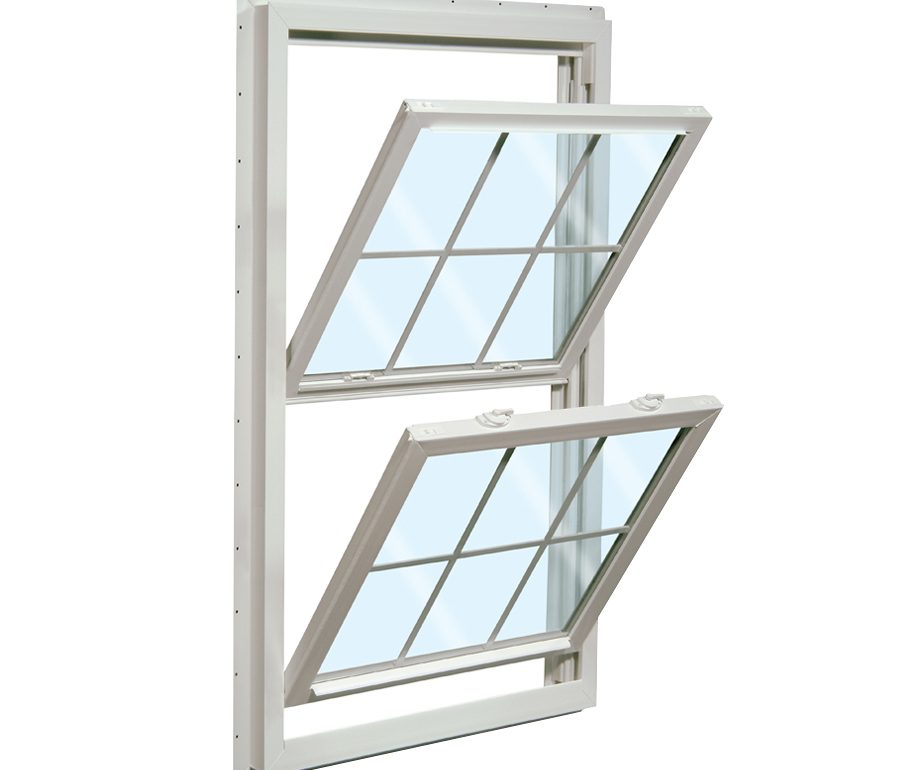
A double-hung window has two sashes, upper and lower, that both slide up and down in the frame. It is one of the most common window styles in American homes, and most makers sell it in vinyl, wood, clad-wood, fiberglass and composite frames. This guide explains how double-hung windows work, how they compare with single-hung and casement windows, and what to check for sizes, safety codes and energy performance.
How Double-Hung Windows Work
You can open the top sash, the bottom sash, or both. With both open, cool air comes in at the bottom while warm air leaves at the top. Most modern double-hung windows also have tilt latches, so each sash can tilt into the room for cleaning the outside glass from indoors. Pella, for example, says all of its double-hung windows have tilt latches on both sashes, and Andersen offers its tilt-wash feature on all of its double-hung windows.
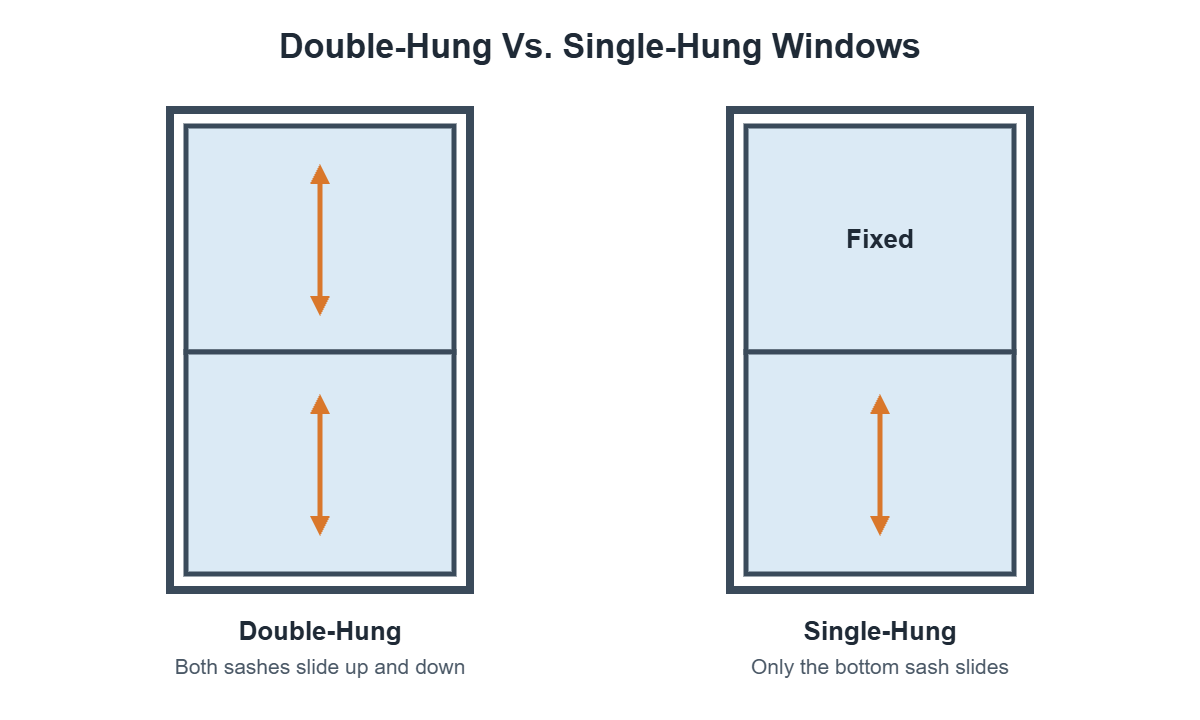
Double-Hung Vs. Single-Hung Vs. Casement
| Feature | Double-Hung | Single-Hung | Casement |
|---|---|---|---|
| How it opens | Both sashes slide up and down | Only the bottom sash slides; the top is fixed | Hinged at the side; cranks outward |
| Ventilation | Top, bottom or both | Bottom only | Whole sash opens |
| Cleaning outside glass | Both sashes usually tilt in | Bottom sash may tilt in | Depends on the model |
| Air sealing | Sliding seals | Sliding seals | Compression seal when locked |
| Window air conditioner | Fits | Fits | Does not fit a standard unit |
| Opens onto a walkway or deck | No obstruction | No obstruction | Sash swings outward |
Single-hung windows have a fixed upper sash, so ventilation is limited to the bottom opening. Casement windows usually seal tighter when locked, because the lock pulls the sash against the weatherstripping, while double-hung sashes slide against their seals. See our casement and awning window guide and slider window guide for those styles.
Where Double-Hung Windows Work Best
- Traditional and Colonial-style homes, where the two-sash look is expected.
- Upper floors, where tilt-in sashes avoid ladder work for cleaning.
- Rooms next to patios, decks and walkways, since nothing swings outward.
- Rooms where you want to use a window air conditioner.
Standard Double-Hung Window Sizes
Double-hung windows are made in many stock widths and heights, and replacement windows are usually made to the measured opening. Our standard window sizes chart lists common double-hung sizes along with the other window types.
Building Codes: Egress And Fall Protection
Egress In Bedrooms
A bedroom window that serves as the emergency escape opening must meet the residential code’s minimum net clear opening, which includes at least 24 inches of clear height and 20 inches of clear width. Because only one sash of a double-hung window can be fully open at a time, the clear opening is roughly half the window, so a double-hung needs a larger overall size to qualify than a casement does. Check the manufacturer’s net clear opening figures for the exact size. Our egress window guide covers the full requirements.
Window Fall Protection
Under the International Residential Code (section R312.2), when the sill of an operable window is less than 24 inches above the finished floor and more than 72 inches above the ground outside, the window needs fall protection. That usually means a window opening control device that meets ASTM F2090 and limits the opening until an adult releases it. A released device must still allow the full egress opening. Local codes can differ, so confirm with your building department.
Energy Efficiency
ENERGY STAR sets window requirements by climate zone, based on ratings certified by the National Fenestration Rating Council (NFRC). Compare the NFRC label on each window, especially the U-factor (lower is better at keeping heat in) and the solar heat gain coefficient (lower is better at blocking summer sun). If the maker publishes an air leakage rating, a lower number means less draft through the sash seals.
Pros And Cons
| Pros | Cons |
|---|---|
| Ventilation from the top, bottom or both | Only half the window opens at once |
| Tilt-in sashes for cleaning from indoors | Sliding seals generally leak more air than casement seals |
| Nothing swings into walkways or decks | Needs a larger size than a casement to meet egress |
| Works with window air conditioners | More moving parts than a single-hung |
Cost Factors
Double-hung window prices depend on the frame material, glass package, size, color and grille options, and whether the job is a full-frame or insert replacement. Single-hung windows, with one fixed sash, are generally offered as the lower-cost option. For installed cost ranges, see our window replacement cost guide.
Who Makes Double-Hung Windows
Nearly every major window maker sells double-hung windows. Our reviews cover Andersen, Marvin, Sierra Pacific, Ply Gem, American Craftsman and Window World.
Frequently Asked Questions
What Is The Difference Between Single-Hung And Double-Hung Windows?
In a double-hung window both sashes move. In a single-hung window only the bottom sash moves and the top sash is fixed.
Do Both Sashes Tilt In For Cleaning?
On most current double-hung windows, yes. Check the product, since tilt latches are a feature of the specific model.
Can A Double-Hung Window Be An Egress Window?
Yes, if the open sash gives the required net clear opening. Because only half the window opens, it must be larger than a casement window to qualify.
Are Double-Hung Windows Energy Efficient?
They can be. Compare the NFRC ratings and ENERGY STAR certification for your climate zone. Casement windows usually seal tighter, but glass and frame quality matter more for most homes.
Sources
- Pella, Single-Hung Vs. Double-Hung Windows
- Milgard, What Is A Double Hung Window
- Andersen, Single Vs. Double-Hung Windows
- Stanek Windows, Double-Hung Vs. Casement Windows
- Green Building Advisor, Double-Hung Vs. Casement Energy Difference
- ENERGY STAR, Residential Windows, Doors And Skylights Key Product Criteria
- International Code Council, Child Window Safety Report
- City Of Twin Falls, Window Fall Protection Construction Tip Sheet
- MyBuildingPermit.com, Window And Glass Door Guards Tip Sheet