

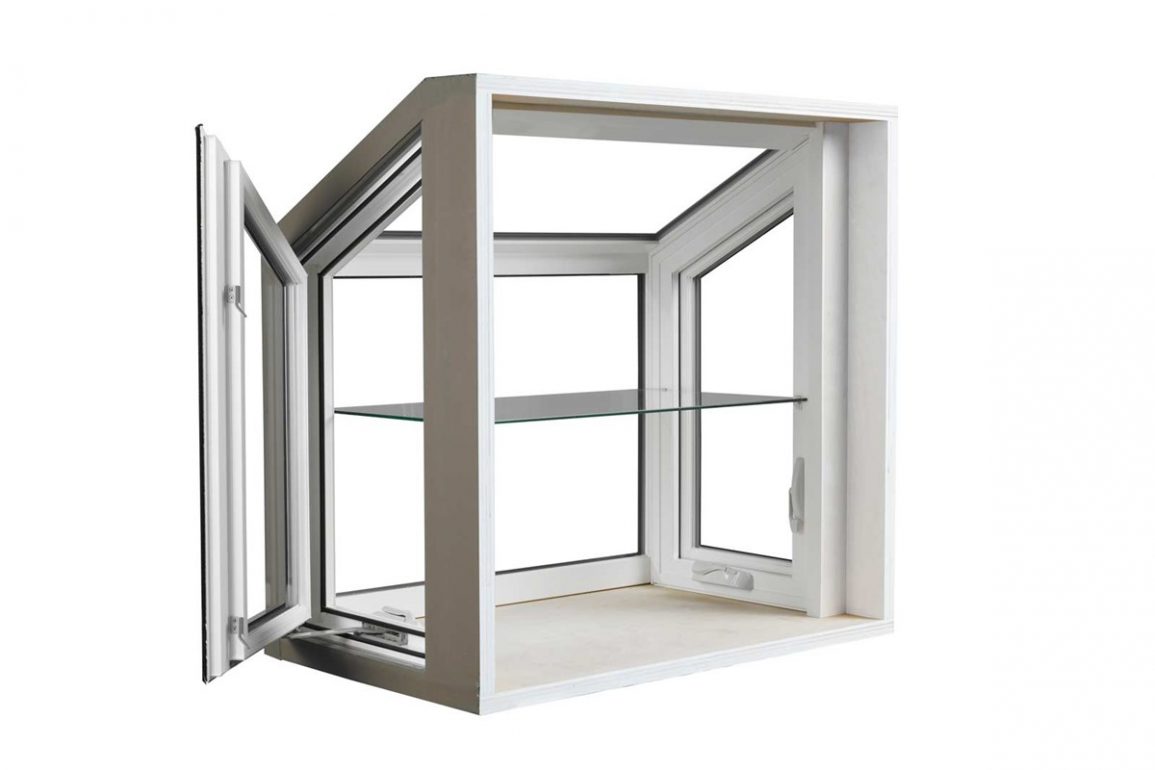
A garden window, sometimes called a greenhouse window, is a small box of glass that projects out from the wall, usually over a kitchen sink. Light comes in through the front, both sides and a sloped glass top, and a deep shelf inside holds herbs, plants or decorations. This guide explains how garden windows are built, how they compare with bay windows, and what to know about support, energy, condensation and cost.
How Garden Windows Are Built
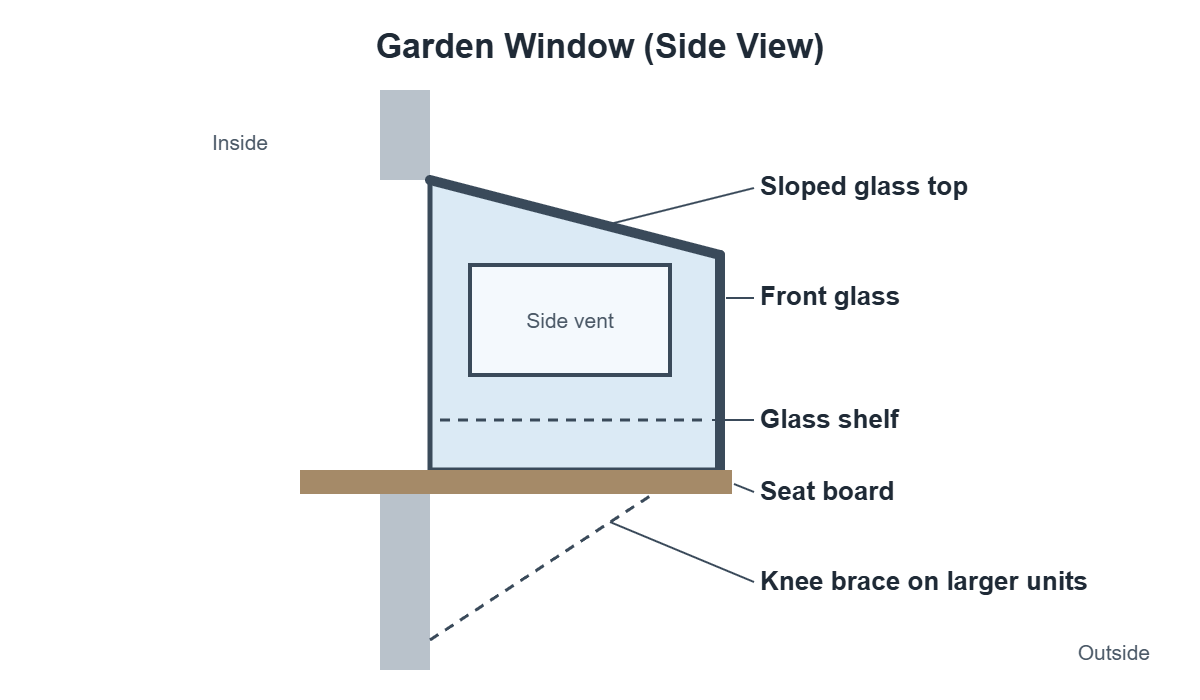
- Front glass: a large fixed pane facing out.
- Side vents: Milgard describes garden windows as generally having side vents for ventilation, often small casement windows that crank open.
- Top: a sloped glass roof panel. Atrium, for example, uses laminated safety glass in its roof panel.
- Seat board and shelf: a solid bottom that extends into the room as a deep sill, often with one or more glass shelves on brackets.
Andersen builds its garden window option as a 90-degree box bay, with a picture window in the center and a casement window on each side, in its 400 Series and E-Series lines.
Garden Window Vs. Bay Window
| Feature | Garden Window | Bay Window |
|---|---|---|
| Shape | Box with square corners and a glass top | Three or more windows at 30° to 45° angles |
| Typical size | Small; sized for a kitchen window opening | Larger; often a room feature or seat |
| Top | Glass | Solid head board, with a roof or overhang above |
| Typical location | Over a kitchen sink | Living rooms, bedrooms, dining nooks |
| Ventilation | Small side vents | Operable flankers |
For the larger projecting styles, see our bay and bow window guide. For the casement vents used on most garden windows, see our casement and awning window guide.
Support And Installation
A garden window hangs off the wall and carries the weight of its glass and whatever sits on the shelf, so it needs proper support and careful flashing. Andersen notes that because garden windows project outside the home and are more exposed to the elements, proper installation is key. Makers’ instructions give specific limits, for example:
- Harvey’s Series 2050 instructions require knee brace support for units more than 72 inches wide or 60 inches high, and limit the optional glass shelf to 8 pounds per square foot.
- Tru-Frame’s greenhouse window instructions call for support brackets attached to the studs below the window and warn that the warranty could be void without proper support.
Follow the manufacturer’s installation instructions for your unit. Because a garden window usually has a glass top, it does not need a separate roof the way a bay window does, which keeps installation simpler.
Energy Efficiency
A garden window has more glass for its size than a flat window, including a glass top that faces the sky, so the glass package matters. Look for low-E insulated glass, compare NFRC ratings, and ask about an insulated seat board; one maker’s spec sheet lists an insulated seat board option rated R-6.22. In hot, sunny exposures, a glass top can make the box warm in summer, so consider the orientation of the wall.
Condensation And Moisture
Kitchens produce steam and garden windows hold damp potting soil, so condensation on the inside glass is common in cold weather. An independent home-inspection guide suggests running the range hood when cooking, using saucers under pots and not overwatering, opening the side vents on mild days, keeping blinds open so room air reaches the glass, and wiping the sill and shelf brackets dry. Fogging between the panes of an insulated glass unit is different: it means the seal has failed and the glass unit needs replacing.
Cleaning
The outside of the front and top glass can be hard to reach because the box projects from the wall. Plan for occasional cleaning from outside. Inside, remove the shelf and clean up spilled soil and water promptly so moisture does not damage the seat board.
Pros And Cons
| Pros | Cons |
|---|---|
| Light from the front, sides and top | Outside glass harder to clean |
| Shelf space for herbs and plants | Condensation in cold weather |
| Side vents for kitchen ventilation | Needs support and careful flashing |
| Simpler to install than a full bay | Glass top can add summer heat gain |
Cost Factors
Cost depends on size, frame material, glass package (including the top glass), insulated seat board and shelf options, and whether the unit replaces an existing window of the same size or the opening must change. Large units that need knee braces add installation work. For general installed cost ranges, see our window replacement cost guide.
Who Makes Garden Windows
Garden windows are offered by Andersen (as a box bay), Milgard, Atrium and other vinyl window makers. Our reviews cover Andersen, Ply Gem and Window World.
Frequently Asked Questions
What Is A Garden Window?
A box-shaped window that projects from the wall, with glass on the front, sides and top and a shelf inside, usually installed over a kitchen sink.
Do Garden Windows Open?
Most have small side vents, often casement windows, that open for ventilation. The front and top are usually fixed.
Do Garden Windows Need Support?
Yes. Follow the maker’s instructions; larger units may need knee braces or brackets fastened to the framing below.
Why Does My Garden Window Get Condensation?
Kitchen humidity and damp soil meet cold glass. Run the range hood, avoid overwatering and open the vents when you can. Fog between the panes means a failed seal.
Sources
- Andersen, Garden Window Ideas
- Milgard, Garden Windows
- Atrium, Garden Windows
- Harvey, Series 2050 Garden Window Installation
- Tru-Frame, Greenhouse Window Installation Instructions
- Polaris, Garden Window Spec Sheet
- Inspect And Test, Garden Window Guide
- Extreme How-To, Installing A Garden Window
- Feldco, Garden Windows
- Fine Homebuilding Forum, Garden Window